The Teen Therapy Workbook: A Practical Guide for Emotional Growth and Mental Wellness
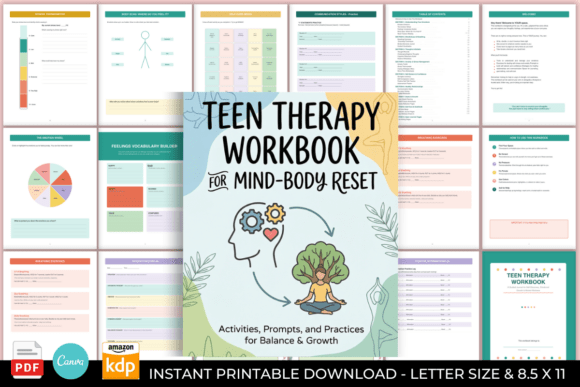
If you have ever watched a teenager struggle to put their feelings into words, you know how frustrating and heartbreaking that silence can be. Many teens carry around emotions they cannot name, thoughts they cannot challenge, and stress they cannot manage. The Teen Therapy Workbook steps into that gap with a structured yet flexible approach that feels more like a guided conversation than a textbook. It is built around sections that walk a young person through understanding emotions, practicing mindfulness, reshaping thoughts, managing anxiety, building self-esteem, navigating relationships, and setting goals. What makes it stand out is how naturally it fits into real life, whether a teen is working through it alone, with a therapist, or as part of a school program.
Where the Workbook Fits Into Real Life
Think about a typical Tuesday afternoon. A teen comes home from school, drops their bag, and retreats to their room. Maybe they had a fight with a friend, bombed a test, or just feel off for no clear reason. Without tools to untangle what is happening inside, that frustration often turns into withdrawal, anger, or doom scrolling on a phone. The Teen Therapy Workbook gives them something concrete to open up, scribble in, and slowly make sense of their own headspace. The Emotion Check-In and Emotion Wheel are especially useful here. Instead of saying "I feel bad," a teen can point to "disappointed" or "overwhelmed" and start to see patterns over time.
For parents, having this workbook at home can be a quiet anchor. You do not have to be a therapist to say "Hey, maybe try the Mood Tracker for a week" or "I noticed you seemed tense, the Breathing Exercises section might help." It shifts the dynamic from nagging or guessing to offering a tool the teen already trusts. One parent I know left the workbook on the kitchen counter with a sticky note that said "Page 23 helped me today." Her daughter rolled her eyes but later that night, the book was gone from the counter. Sometimes the smallest invitation works.
Different Audiences, Different Benefits
The beauty of a resource like this is how differently it serves various people. Let me walk through some of the key groups and how they might use it.
Therapists and Counselors
For professionals, the Teen Therapy Workbook is a ready-made toolkit that saves hours of prep. Instead of designing worksheets from scratch for each client, a therapist can pull out the Thought Records section when a teen is stuck in negative patterns or the Conflict Resolution pages when family dynamics come up. It provides a common language between sessions. One school counselor I spoke with uses the Stress Thermometer at the start of every session. She asks teens to color in where their stress level is that day, and it instantly opens a conversation without interrogating them. The workbook becomes a bridge, not just a document.
Schools and Educators
Teachers and school psychologists often work with limited resources and time. A classroom set of these workbooks can support advisory periods, health classes, or small intervention groups. The Coping Strategies Menu is a favorite among educators because it is practical and nonjudgmental. A student who feels anxious before a presentation can flip to that page, pick a strategy, and try it right there. The Guided Visualization section also works well for whole-class calm-down moments after a stressful test or before a tough discussion. Schools using the workbook report that it gives students a sense of ownership over their mental health, which is a huge win in an environment where teens often feel powerless.
Parents and Caregivers
Parents are often the ones buying the workbook, but they are not always sure how to use it without overstepping. The "How to Use This Workbook" section at the beginning is helpful for this. It offers clear guidance without being prescriptive. A parent might use the Strengths Inventory to help a teen see beyond grades or social media likes. The Self-Compassion Letters section is another gem. I have seen teens write letters to themselves that they would never say out loud, and parents who read them later said it changed how they understood their child's inner world. The workbook works best when it is treated as a companion, not a curriculum.
Teens on a Personal Growth Journey
Some teens pick up the workbook on their own. Maybe they found it online, a friend recommended it, or they are just curious. For self-directed teens, the Teen Therapy Workbook functions like a personal coach. The Achievement Tracker and Positive Self-Talk Practice give them small wins that build momentum. The Cognitive Distortions Guide is especially eye-opening for teens who tend toward all-or-nothing thinking. One teen told me that reading about "mental filtering" made her realize she was ignoring all the good feedback on a project because of one critical comment. That kind of self-awareness is powerful at any age, but especially during the teenage years when the brain is still learning how to process complex emotions.
Practical Examples of How It Works
Let me give you a few scenarios that illustrate how the workbook plays out in real situations.
Scenario: A teen dealing with social anxiety. They are worried about a party on Friday. Using the Anxiety Toolkit, they write down specific worries. Then they use the Worry Time Worksheets to schedule a set time to think about those worries, which stops the anxiety from taking over the whole week. They also practice a grounding technique from the Mindfulness section before walking into the party. The workbook does not eliminate the anxiety, but it gives the teen a process to move through it.
Scenario: A teen struggling with low self-esteem after a breakup. They might start with the Self-Compassion Letters section, writing kind words to themselves that they would normally reserve for a friend. Then the Positive Affirmations section helps them rebuild internal narratives that are not tied to someone else's validation. The Healthy Relationships section also helps them see what went wrong in the relationship without blaming themselves entirely. The workbook becomes a safe space to process heartbreak without judgment.
Scenario: A school group focused on building communication skills. A counselor leads a session using the Communication Styles and Boundary Setting pages. Teens role-play different scenarios, then write about how it felt in their Body Scan. The workbook gives structure to the group work, and each teen leaves with something personal to take home. The next week, they bring back questions or insights from the Conflict Resolution section. It creates continuity that a single workshop cannot provide.
Common Considerations Before Using the Workbook
No resource is perfect for everyone, and it helps to think through a few things before diving in. First, the Teen Therapy Workbook is most effective when a teen is at least somewhat open to self-reflection. If a teen is in crisis or deeply resistant, the workbook might feel like homework. In those cases, using it alongside a therapist who can guide the process yields much better results than handing it over cold.
Second, the workbook is designed for a general teen audience, which means it does not address every specific mental health condition. A teen with severe depression, trauma, or neurodivergence may need adaptations or supplementary resources. The CBT-style exercises like Thought Records and Cognitive Distortions Guide are evidence-based, but they are not a replacement for professional treatment when it is needed. That said, for mild to moderate emotional challenges or general wellness, the workbook is a solid foundation.
Third, age and maturity matter. The language and concepts work best for teens aged roughly thirteen to eighteen. Younger teens may need more guidance from an adult, while older teens can work through it independently. The Mood Tracker and Feelings Vocabulary Builder are accessible to almost everyone, but the Cognitive Distortions Guide and Goal Setting sections assume a certain level of abstract thinking.
Strengths That Make It Stand Out
One of the biggest strengths of the Teen Therapy Workbook is how it balances structure with flexibility. You can use it in order, or you can jump to the section that fits the moment. The layout is clean and inviting, which matters a lot for a demographic that is easily turned off by dense text or boring pages. The inclusion of a Body Scan and Grounding Techniques shows an understanding that emotional work is not just mental, it is physical too. Teens often feel emotions in their bodies before they can name them, and the workbook honors that.
Another strength is the emphasis on strengths and achievements, not just problems. The Strengths Inventory and Achievement Tracker remind teens that they are more than their struggles. This is especially important for teens who have internalized a negative self-view. The Positive Affirmations and Self-Compassion Letters sections build a habit of kindness toward oneself that can last a lifetime.
Potential Limitations Worth Knowing
If I had to point out limitations, I would mention that the workbook assumes a certain level of literacy and emotional vocabulary. For teens who struggle with reading or who come from cultures where emotional expression is less direct, some sections may need explanation or adaptation. The Feelings Vocabulary Builder helps, but it cannot bridge every gap. Additionally, the workbook is a print or digital product, not an interactive app. Some teens prefer digital tools, but the physical act of writing can be more grounding for others. It really depends on the teen.
Another consideration is that the workbook is best used over time, not in one sitting. Rushing through it defeats the purpose. A teen who completes the entire book in a weekend might miss the reflective depth that comes from sitting with a page for a few days. The Worry Time Worksheets and Mood Tracker are designed for weekly or daily use, and that kind of consistency is where the real growth happens.
Wrapping Up the Real-World Value
The Teen Therapy Workbook is not a magic fix, but it is a genuinely useful tool for anyone who supports teens. Whether you are a therapist building a session plan, a parent trying to connect, a school looking for a classroom resource, or a teen exploring your own mind, it meets you where you are. It offers language for emotions, strategies for stress, and a path toward confidence and healthy relationships. In a world where teens are bombarded with pressure from every direction, having a structured, compassionate guide can make all the difference. The workbook does not replace human connection or professional care, but it creates a space where those things can grow.