Mindful Focus for ADHD Kids
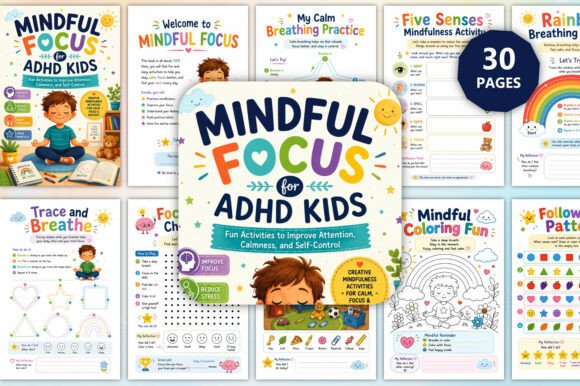
If you've ever watched a child with ADHD struggle to settle into a task, you know how exhausting it can be for everyone involved. The fidgeting, the sudden distractions, the emotional meltdowns over something small. It's not about lack of effort. It's about how their brain processes the world around them. Mindful Focus for ADHD Kids steps into that space with something different: a workbook that doesn't feel like work. It's an activity-driven resource designed to help children build focus, emotional awareness, and self-control through exercises that actually feel playfully engaging rather than clinical or demanding.
What sets this workbook apart is its subtle approach. Instead of telling a child to "pay attention," it guides them through interactive exercises that quietly train concentration. A child who struggles to sit still for five minutes might find themselves calmly tracing a breathing pattern or hunting for hidden objects in a busy illustration. The shift happens naturally, without pressure. For parents and caregivers, that can feel like a small miracle.
When the Morning Routine Feels Impossible
Mornings with an ADHD child can be a whirlwind. Getting dressed, brushing teeth, eating breakfast, remembering school supplies. Each step comes with potential derailment. One common scenario where Mindful Focus for ADHD Kids becomes genuinely useful is as a morning anchor. A single calming breathing exercise, like the Rainbow Breathing activity from the workbook, can be done in under two minutes at the breakfast table. It gives the child something visual and rhythmic to focus on before the chaos of the school day begins. Parents report that this small ritual reduces the number of reminders needed and lowers the emotional temperature of the morning.
This isn't about forcing a child to meditate. It's about offering a tool that feels like a game but delivers a centered state of mind. The focus dot activities and trace-breath pages work especially well in this context because they require minimal setup and can be done anywhere.
In the Classroom: A Quiet Support for Teachers
Teachers often carry the weight of supporting neurodivergent students with limited resources. A child who interrupts, daydreams, or struggles to follow instructions isn't being difficult. They're dysregulated. Mindful Focus for ADHD Kids offers classroom-friendly activities that don't single the child out. The hidden object games, mazes, and spot-the-difference worksheets can be integrated into a calm-down corner or used as a transition tool between lessons.
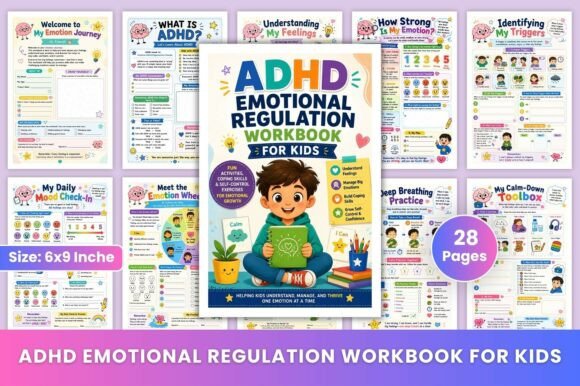
One teacher shared how she uses the pattern recognition pages during afternoon slumps. Students who usually lose focus after lunch found themselves quietly engaged, working through the challenges at their own pace. The emotional regulation exercises, like the Feelings Wheel and emotion matching games, also help children articulate what they're experiencing without needing to verbalize it in front of peers. That's especially valuable for kids who feel embarrassed about their struggles.
For therapists and school counselors, the workbook provides structured yet flexible material for one-on-one sessions. The self-awareness activities give children a language for emotions they might otherwise act out physically. Instead of a child leaving the room frustrated, they might point to a feeling on the wheel and say, "I feel wobbly inside." That's a win.
At Home: After-School Downtime That Actually Works
The after-school hours are notoriously tricky for ADHD kids. They're tired, overstimulated, and often holding in emotions all day. The result? Meltdowns, defiance, or complete shutdown. Mindful Focus for ADHD Kids can be a bridge between school energy and home calm. The mindful coloring pages with positive affirmations are particularly effective here. Coloring itself is regulating, and pairing it with a simple phrase like "I am calm" or "I can focus" reinforces a positive internal narrative.
Parents can sit alongside their child and work on a page too. That shared experience matters. It removes the feeling of being "fixed" and replaces it with connection. The gratitude journal pages offer another after-school win. Instead of asking "How was your day?" and getting a shrug, the prompts guide the child toward specific reflections. "Something that made me laugh today" or "One thing I did well." It's concrete, manageable, and builds a habit of positive thinking over time.
Coaching and Therapy Sessions: A Structured Yet Flexible Tool
ADHD coaches and therapists often need materials that are both structured enough to guide a session and flexible enough to adapt to a child's mood. Mindful Focus for ADHD Kids works well in this setting because it doesn't prescribe a rigid curriculum. A practitioner might pull out the focus dot activities when a child arrives dysregulated, using them as a landing exercise. Or they might use the emotion matching games to help a child practice identifying facial cues and body language, a skill many ADHD kids struggle with.
The self-control exercises woven into the workbook are subtle. They don't lecture the child on impulse control. Instead, they present challenges that require pausing before acting. Mazes and pattern recognition tasks ask the child to plan ahead, hold multiple steps in working memory, and follow through. Over time, these small wins build a sense of capability. For a child who hears "try harder" all day, experiencing actual progress in a low-stakes setting can be transformative.
Considerations Before Using the Workbook
No single tool works for every child, and Mindful Focus for ADHD Kids is no exception. Some children may resist structured activities altogether, especially if they associate workbooks with school pressures. In those cases, introducing the book as a choice rather than a requirement makes a difference. Let the child flip through and pick a page that catches their eye. The coloring and dot activities tend to be the most approachable starting points.
It's also worth noting that children with more severe attention challenges may need the activities broken into very small segments. A full page of pattern recognition could feel overwhelming, but a single row might feel doable. The workbook's strength is its variety, so rotating through different types of exercises keeps the experience fresh. Repetition is helpful for skill building, but too much repetition leads to boredom. Parents and teachers should feel free to skip around and use only what fits the moment.
Another consideration: the workbook is a supplement, not a replacement. It works best alongside other supports like therapy, medication if prescribed, sleep routines, and nutrition. No workbook alone can solve the complex challenges of ADHD. But as a daily tool for building focus and emotional awareness, it holds real value.
Who Benefits Most from This Approach
Mindful Focus for ADHD Kids tends to resonate most with children aged roughly five to twelve, though older kids with developmental delays or executive function challenges may also find it accessible. The visual nature of the activities appeals to children who learn best through seeing and doing rather than listening. Parents who feel at a loss for how to talk about emotions with their child will find the prompts and wheels especially useful. They remove the guesswork.
Teachers in inclusive classrooms can use the worksheets for the whole group, not just one child. The activities are universal enough that every student can benefit from a moment of focused breathing or a gratitude check-in. That normalization is important. When the whole class does a calming exercise together, the ADHD child doesn't feel singled out.
Therapists working with ADHD kids in private practice often report that the workbook helps extend the benefits of session work into the home environment. Parents can reinforce the same language and exercises between appointments, creating consistency that supports long-term growth. The journaling and reflection pages also give therapists insight into how the child is processing emotions between sessions.
Practical Strengths and Honest Limitations
One clear strength of Mindful Focus for ADHD Kids is its low barrier to entry. There's no app to download, no screen to manage, no subscription. It's a physical object a child can hold, flip through, and interact with tactilely. For kids who are already overstimulated by screens, that's a genuine plus. The variety of activities also means there's almost always something that fits the child's current mood or energy level.
On the limitation side, the workbook requires adult presence for best results, especially in the early stages. A child with ADHD left alone with a book of activities may lose interest quickly without guidance. The value comes when an adult sits beside them, offers encouragement, and helps them pivot if an activity isn't clicking. This isn't a set-it-and-forget-it resource. It's a collaborative tool.
Another limitation is that the workbook's effectiveness depends on consistency. Using it once during a moment of crisis is less helpful than integrating small exercises into daily routines. Parents and teachers who can commit to even five minutes a day will see better results than those who reach for it only during difficult moments. That said, even occasional use offers some benefit. A single calming breathing exercise during a meltdown can still help reset the nervous system in that moment.
Finally, some children may initially resist anything labeled as "mindfulness." The word itself can carry baggage for kids who feel they're being asked to change who they are. In those cases, reframing the exercises as games, challenges, or quiet time activities can make all the difference. The workbook's playful design helps here. Most children won't recognize they're practicing mindfulness. They'll just know they had fun tracing the rainbow or finding the hidden star.
Supporting the Whole Child, One Activity at a Time
Mindful Focus for ADHD Kids fills a specific niche: it offers practical, engaging, and low-pressure exercises that support focus and emotional regulation without demanding perfection. For the child who feels overwhelmed by their own brain, it provides moments of calm and clarity. For the parent who feels exhausted, it offers a structured yet gentle way to connect. For the teacher managing a diverse classroom, it provides tools that work without adding to the workload.
The workbook won't replace professional support, and it won't eliminate every difficult moment. But in the hands of a caring adult, it becomes something meaningful. A tool for building skills, yes. But also a bridge to understanding what a child is experiencing, one breathing exercise, one maze, one grateful thought at a time.