Kids Daily Fun Planner – A Practical Tool for Real Life
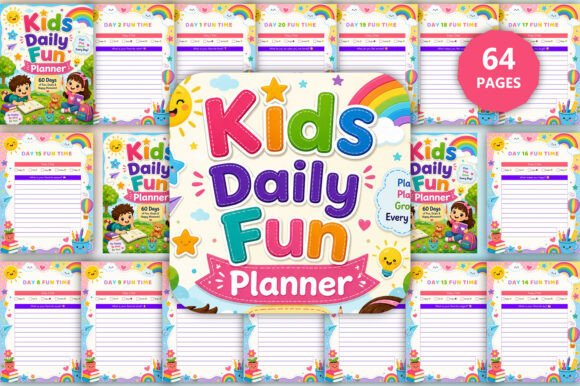
If you have ever tried to help a child build a simple morning routine or encourage them to talk about their day, you know it is not always straightforward. Kids process the world differently, and sometimes a blank notebook or a stiff schedule only makes them shut down. That is where the Kids Daily Fun Planner steps in. It is not another chore chart or a rigid academic workbook. Instead, it is a colourful, 60-day journal that blends emotional check-ins, creative prompts, and light writing exercises into something children actually want to use.
This planner works because it meets kids where they are. Instead of telling them what to do, it invites them to share what they feel, imagine, and enjoy. For parents, educators, and anyone who works with children, that shift in tone makes all the difference.
Where and Why Parents Reach for This Planner
Most parents discover the Kids Daily Fun Planner during a season when life feels a little chaotic. Maybe school mornings are turning into battles, or the after-school wind-down is filled with meltdowns rather than conversation. The planner becomes a gentle anchor. A child can sit down after breakfast or before bed, flip to the day’s page, and mark how they feel. Are they happy, sleepy, excited, or sad? That simple act of naming an emotion helps both the child and the adult understand what is going on beneath the surface.
One mother I spoke to uses the planner with her six-year-old during their afternoon snack time. She noticed that her son would never volunteer information about his school day. But when he saw the daily question — “What was your favourite toy today?” or “What did you eat for lunch that made you smile?” — he started talking naturally. The planner did not interrogate him. It just gave him a starting point.
The confidence and personal growth aspect is not abstract here. When a child answers a prompt like “If you had a superpower, what would it be?” and sees their words written down, something clicks. They realise their ideas matter. Over 60 days, that builds a quiet self-assurance that no sticker chart can replicate.
How Educators and Homeschoolers Use It Differently
Teachers and homeschool parents face a different challenge. They need tools that fit into a learning environment without feeling like extra work. The Kids Daily Fun Planner works well as a morning warm-up or a wind-down activity. In a classroom, a teacher might hand out the JPG files or printed pages at the start of the day. Students spend five minutes filling out the daily feelings tracker and answering the fun prompt. It settles the room and gives the teacher insight into how each child is arriving that day.
A homeschool parent I know uses the planner as her child’s “brain dump” time before lessons begin. Her daughter, age eight, sometimes wakes up anxious about a math problem or a social situation. Writing down a silly answer to “What would your dream house look like?” shifts her mood. It also doubles as handwriting practice and creative thinking, all without feeling like a lesson.
The 60-day structure matters in educational settings. It is long enough to form a habit but short enough that a child can finish it and feel a sense of accomplishment. Teachers can even use it as a portfolio piece at parent-teacher conferences to show growth in emotional vocabulary and written expression over two months.
Creative Entrepreneurs and Small Business Owners
If you run a small business selling digital products, printable resources, or educational materials, the Kids Daily Fun Planner offers a very practical use case. It is not just a product you sell once. It is a versatile asset you can adapt, bundle, or use as a lead magnet to grow your audience.
For example, a creator on Etsy or Gumroad can take the editable Canva link and rebrand the planner with their own colours, logo, or additional prompts. That editable file is a game-changer because it turns a one-size-fits-all product into something that feels custom-made. A small business owner targeting Montessori families might adjust the language slightly. Another creator focusing on neurodivergent children might add extra emotion cards or simplify the layout. The flexibility means you serve a niche audience without starting from scratch.
I have also seen bloggers use the planner as a free opt-in gift. Parents love downloadable, print-at-home resources that look professional. The high-quality, upload-ready PDF files mean you can offer a polished product immediately. That builds trust with your audience, and it often leads to sales of your paid products later.
For marketers, the planner solves a common problem: how to engage an audience of parents without being pushy. A short email sequence that shares three sample pages, a tip for using the feelings tracker, and a story about how one child reacted to the “dream house” prompt can feel like genuine help rather than a sales pitch.
Publishers and Hobbyists Looking for Standalone Value
Publishers who produce children’s activity books or journals know that the market is crowded. What makes the Kids Daily Fun Planner stand out is the balance between structure and freedom. Many journals over-direct the child, leaving no room for personality. Others are too open-ended and confuse a young user. This planner sits in the middle. The writing self-expression section invites free thought, but the fun daily questions guide the child when they do not know what to write.
A hobbyist who enjoys designing printables for family or friends can also use the planner at home without any commercial intent. The kid-friendly design with bright, engaging pages means you can print it on standard paper at home or take the PDF to a local print shop. It holds up well, and children respond to the visual energy. I have seen kids reach for the planner on their own, not because an adult told them to, but because the colours and layout feel inviting.
Practical Considerations Before You Download or Buy
Before you use the Kids Daily Fun Planner in any setting, there are a few things worth thinking about. First, consider the age of the child. The planner is designed for kids who can read basic words and write short sentences, typically ages five to nine. A younger child might need help reading the prompts aloud. An older child might find the prompts too simple. If you are using it with a nine-year-old, let them answer in drawings or longer sentences to keep it challenging.
Second, think about when you will use it. The planner works best when it becomes part of a routine, not an extra task. Attach it to something the child already does, like after brushing teeth at night or right before a weekend breakfast. If you try to force a new time slot, it may feel like a demand rather than a treat.
Third, be aware of the 60-day structured planner format. That is a commitment, but it is also a feature. Some children thrive on knowing there is an endpoint. You can celebrate when they finish the last page. If your child loses interest midway, skip a few days or let them jump to a favourite prompt. The planner is a tool, not a test.
Finally, if you are a creator or business owner planning to sell or adapt the planner, check the licence terms that come with your file. The editable Canva link gives you room to customise, but always confirm whether you are allowed to resell or modify for commercial use. That small step saves headaches later.
Connecting Features to Real Outcomes
Every feature in this planner was designed with a specific outcome in mind. The daily feelings tracker is not just a cute chart. It teaches emotional literacy. When a child learns to label “excited” versus “happy,” they build vocabulary that helps them navigate social situations at school and home. Over 60 days, they begin to notice patterns: “I usually feel sleepy on Mondays” or “I feel happy after playing outside.” That self-awareness is a life skill most adults still work on.
The fun daily questions like favourite food or dream superpower are not random. They create low-stakes opportunities for writing. A child who says “I do not know what to write” can circle their favourite toy and suddenly has a sentence. That reduces the anxiety that often comes with blank pages.
The creativity and imagination prompts — “What would your dream house look like?” — invite visual thinking. Some children will draw. Others will write. A few will do both. The planner does not force one mode of expression, which is why it works for different learning styles.
And the confidence and personal growth piece happens quietly. When a child flips back through the completed pages and sees 60 days of their own ideas, they realise they are a person with thoughts worth recording. That is not fluff. That is the foundation of a healthy self-concept.
Final Thoughts for Anyone Considering This Planner
The Kids Daily Fun Planner is not a magic solution. It will not instantly turn a reluctant writer into a novelist or a shy child into a public speaker. What it does is create a small, consistent space for a child to be themselves. Whether you are a parent trying to connect after a long day, a teacher looking for a calm classroom start, or a creator searching for a product that actually sells, this planner has a place in your routine.
The smartest way to use it is to treat it as a starting point. Let the child colour outside the lines, skip a page, or answer a question with a drawing. The structure is there to support, not restrict. And if you are the adult guiding them, remember that your own calm presence matters more than any prompt. The planner is a bridge, but you are the one who walks across it with them.