PCOS PCOD Health Tracker Journal: A Practical Tool for Hormone Health Management
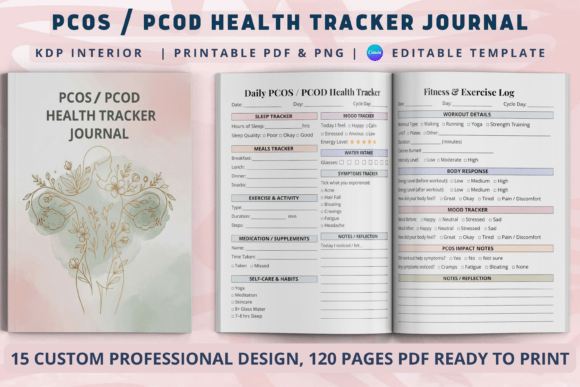
The PCOS PCOD Health Tracker Journal is a structured notebook designed to help women with Polycystic Ovary Syndrome (PCOS) or Polycystic Ovarian Disease (PCOD) systematically record and monitor daily health habits, symptoms, cycles, and lifestyle factors. It combines guided tracking pages with educational content about hormonal imbalance, offering a physical framework for those who prefer writing over digital apps. The journal includes sections for period tracking, symptom logging, meal planning, fitness logs, medication and supplement records, mood and mental health tracking, self-care habits, and monthly progress reviews. Its clean, minimal layout aims to make consistent tracking straightforward and less overwhelming for women managing a chronic endocrine condition.
What the Journal Offers at a Glance
The journal is divided into several thematic sections. A simple guide explains PCOS and PCOD basics. Goal-setting pages allow you to define personal health objectives. Daily tracker pages combine symptom, period, mood, diet, exercise, and medication entries in a single spread. Separate logs for meals, fitness, supplements, and self-care provide deeper dives into each area. Monthly review pages help you look back at trends and adjust your approach. Blank notes pages offer flexibility for reflections or additional data. The design is intentionally minimal, avoiding visual clutter so that users focus on the data itself.
Who Might Be Interested in This Journal
Women who have recently been diagnosed with PCOS or PCOD and feel uncertain about where to start with lifestyle management often find this type of journal helpful. Those who have tried digital trackers but felt disconnected from the process may prefer the tactile experience of handwriting. Individuals working closely with a healthcare provider—such as an endocrinologist, gynecologist, or dietitian—can use the journal to bring organized data to appointments. People who feel that their symptoms are unpredictable or that they cannot see patterns may benefit from the structured daily logging. Furthermore, women who are trying to conceive and need to track cycles, ovulation signs, and lifestyle factors closely may find the period and symptom trackers especially relevant.
Pattern Recognition and Data Clarity
One of the main advantages is the ability to identify correlations between lifestyle factors and symptoms. For instance, you might notice that high-carb days are followed by increased fatigue or that certain supplements correlate with more regular cycles. The journal’s monthly review section encourages this retrospective analysis, which can be difficult to do mentally or with scattered notes. Over time, the accumulated data can reveal trigger foods, stress responses, and exercise impacts that might otherwise go unnoticed.
Consistency and Accountability
Having a physical journal that sits on your nightstand or desk creates a visual reminder to track daily. The pre-printed prompts reduce the friction of deciding what to record each day. Many women find that the act of handwriting reinforces commitment and mindfulness, making them more likely to stick with tracking over weeks and months. The goal-setting pages also provide a reference point to revisit when motivation wanes.
Improved Communication with Healthcare Providers
Bringing a completed journal to medical appointments gives clinicians a longitudinal view of your cycle, symptoms, and habits. This objective record can be more informative than recalling events from memory. It may help your doctor adjust medication dosages, suggest specific dietary changes, or recommend additional tests based on observed patterns. The journal essentially transforms subjective experience into structured data that supports clinical decision-making.
Holistic Coverage of Health Dimensions
Unlike basic period trackers that only log cycle dates, this journal covers diet, exercise, mood, self-care, and medication. This breadth matters because PCOS management is rarely about one factor alone. Metabolic health, mental wellbeing, sleep quality, and stress levels all interact with hormonal balance. Tracking multiple dimensions in one place helps you see the full picture rather than focusing narrowly on symptoms.
Time Commitment and Consistency
Filling out daily trackers, meal logs, and exercise records requires a consistent time investment—typically five to fifteen minutes per day. For women with demanding schedules or low energy due to PCOS symptoms, this can feel burdensome during the initial adjustment period. The journal’s structure attempts to minimize effort through pre-printed checkboxes and simple scales, but it still demands active participation. If you skip days frequently, the data becomes less useful for pattern analysis.
Limited Customization Compared to Digital Tools
A printed journal offers a fixed set of prompts and layouts. You cannot add new tracking categories, rearrange sections, or automate calculations. Some users may find that certain symptoms or habits important to them are not explicitly included—for example, specific skin issues, hair growth patterns, or sleep quality metrics. While blank notes pages allow some flexibility, the core tracking sections are predetermined. Digital apps, by contrast, often allow full customization of fields and notifications.
Data Portability and Sharing
Physical journals do not easily integrate with electronic health records or telemedicine platforms. If you need to share data with a remote healthcare provider, you would need to photograph pages or manually transcribe information. Digital trackers can export reports directly. For women who see multiple specialists or who participate in research, this portability limitation may be a meaningful barrier.
Potential for Overwhelm or Obsession
Tracking multiple health variables daily can sometimes increase anxiety or hyperawareness of symptoms, especially for individuals prone to health-related distress. The journal is designed to be supportive, but for some women, the act of logging symptoms every day might reinforce a focus on illness rather than wellness. It is important to approach the journal as a tool for insight, not as a scorecard of success or failure. The monthly review pages include reflective prompts that can help reframe tracking as learning rather than judgment.
When This Journal Is a Strong Fit
- You prefer analog methods over digital screens. Writing by hand helps you remember and process information differently, and you enjoy the ritual of journaling.
- You are at the beginning of your PCOS journey. The included guide and structured prompts provide education and direction, reducing the feeling of being overwhelmed.
- You value simplicity and low cognitive load. The minimal design and pre-organized sections mean you do not have to design your own system from scratch.
- You need a tool to prepare for medical visits. You want to show your doctor concrete data rather than vague recollections, and you prefer a physical document to a phone screen.
- You are motivated by visual progress and habit chains. Seeing completed daily entries builds momentum and a sense of accomplishment.
When Alternatives May Be Worth Considering
- You are already comfortable with a digital tracking app. Apps like Clue, Flo, or MyFitnessPal offer similar functionality with reminders, data visualization, and export options. If you already use these consistently, a paper journal may feel redundant or less convenient.
- You need extensive customization. If your tracking needs go beyond the journal’s fixed categories—like specific lab values, ovulation predictor kit results, or detailed sleep staging—a digital tool or a blank bullet journal might serve you better.
- You travel frequently or have limited physical space. A journal adds bulk to your carry. If your lifestyle is highly mobile, a phone-based tracker is more portable and always accessible.
- You share health data with a partner, coach, or remote provider. Digital platforms offer easier sharing and syncing across devices. If collaborative care is central to your management, digital might be more efficient.
- You find handwritten logs demotivating or anxiety-inducing. If writing about symptoms daily makes you feel worse rather than more in control, a less frequent tracking method or a focus on positive habit logging could be healthier.
Assess Your Tracking Style
Before purchasing, consider how you naturally interact with health data. Do you enjoy writing by hand? Are you likely to keep a physical book in a consistent place? Do you prefer structured prompts or open-ended space? The journal works best for people who appreciate guided structure but also want room for personal notes. If you thrive on flexibility and prefer to design your own categories, a blank notebook or a customizable app may be more aligned with your needs.
Start with a Trial Period
If you are unsure about committing to a full journal, consider using the first few pages as a trial. Set a goal to track for two weeks consistently. Evaluate whether the process feels clarifying or burdensome. Pay attention to whether the act of tracking helps you spot patterns or makes you feel more anxious. This small experiment can give you direct evidence about whether the journal fits your personality and lifestyle.
Combine with Professional Guidance
The journal is a complement to, not a substitute for, medical care. Use it to gather data that you bring to your healthcare team. Discuss with your doctor which metrics are most relevant for your specific PCOS phenotype—whether that is cycle regularity, insulin resistance markers, androgen levels, or mental health indicators. Align your tracking priorities with clinical goals to avoid collecting data that is interesting but not actionable.
Consider Pairing with a Digital Backup
Some women use the journal as their primary daily tracker but take monthly photos of completed pages for digital backup. This hybrid approach preserves the benefits of handwriting while creating a duplicate record that can be shared or reviewed later. If data loss or misplacement is a concern, this simple strategy reduces risk without abandoning the analog experience.
Evaluate Your Motivation for Tracking
Be honest about why you want to track. If the goal is to feel more in control and understand your body better, a structured journal can be empowering. If the motivation is driven by fear or pressure to achieve perfect health metrics, tracking may amplify stress. The best use of this journal is as a curious, nonjudgmental tool for discovery—not as a performance monitor. Revisit your intentions periodically, especially during the monthly review pages, to ensure the practice remains supportive.
Final Thoughts on Alignment with Your Goals
The PCOS PCOD Health Tracker Journal occupies a specific niche: it is a paper-based, guided system for women who want to systematically log multiple dimensions of their health without the distractions of digital devices. Its strength lies in its simplicity, coverage, and design for long-term pattern recognition. Its limitations include lack of customization, data portability challenges, and the need for consistent daily effort. For women who value analog journaling, are motivated by seeing patterns emerge on paper, and want a concrete tool to bring to medical appointments, this journal can be a practical and supportive part of a broader health management strategy. For those who prioritize customization, digital integration, or minimal time investment, alternative tools may better fit their lifestyle. Ultimately, the right choice depends on your personal tracking style, your medical needs, and how the practice of journaling affects your relationship with your health.