The Story-Driven Value Economy: How "Luna and the Rainbow Moon" Reflects the Future of Children's Content
The landscape of children's media is undergoing a profound transformation. For decades, the primary metrics for success in the picture book industry were simple: entertainment value and literacy support. Today, however, a more sophisticated demand is driving purchasing decisions among parents, educators, and caregivers. They are seeking content that actively contributes to a child's emotional architecture. This is where Luna and the Rainbow Moon enters the conversation. It is not merely a story; it is a case study in how modern children's content can bridge the gap between magical narrative and measurable emotional learning. For creators, entrepreneurs, and marketers, understanding the mechanics behind this book's approach is essential to navigating the new story-driven value economy.
The Market Shift Towards Emotional Intelligence
The rising emphasis on Social Emotional Learning (SEL) in early childhood education has fundamentally altered the content marketplace. Parents and professionals are no longer satisfied with books that simply teach the alphabet or colors. They are actively seeking tools that help children navigate complex internal landscapes—fear, impatience, sadness, and joy. Luna and the Rainbow Moon directly addresses this gap. By framing the restoration of the moon's colors around seven core values—kindness, patience, joy, hope, courage, honesty, and love—the book provides a structured, repeatable framework for emotional discussion. For an educator or a child psychologist, this narrative architecture is invaluable. It transforms a bedtime reading session into a subtle therapeutic dialogue, allowing children to safely explore difficult concepts through the lens of Luna's adventure. This alignment with SEL standards is a primary driver of the book's growing attention within professional circles.
Deconstructing the KDP and Creator Economy Blueprint
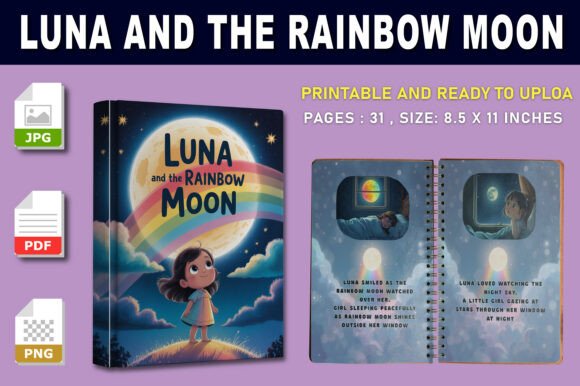
For entrepreneurs and freelancers operating within the Amazon KDP ecosystem, Luna and the Rainbow Moon serves as a masterclass in product-market fit. The book's metadata strategy, as hinted by its thematic icons (Magical Adventure, Rainbow Theme, Emotional Learning, Bedtime Friendly), is meticulously optimized for discoverability. The title itself targets high-intent long-tail keywords: "rainbow," "moon," and "bedtime story." From a business perspective, the book succeeds because it occupies a specific niche at the intersection of fantasy and pedagogy. The underlying lesson for the professional audience is clear: the most successful KDP titles are those that solve a distinct problem for the reader. In this case, the problem is the modern parent's need for meaningful, calming, and instructive content that fits into the bedtime routine. The book's structure—a gentle, dreamy quest with tangible moral takeaways—provides a replicable blueprint for content creators looking to build a sustainable catalog in the children's educational space.
Why "Rainbow" and "Moon" Are Powerful Visual-Archetypes
From a branding and design perspective, the choice of the "Rainbow Moon" is strategically brilliant. The rainbow is a universal signifier of hope, diversity, and wholeness. The moon represents constancy, mystery, and the subconscious. When combined, they create a compelling visual metaphor for emotional balance. The narrative hook—the moon has lost its colors—is an intuitively graspable crisis for a 4-to-8-year-old child. The journey to restore those colors is a journey toward inner equilibrium. For marketers and creatives, this demonstrates the power of using strong, visually iconic symbols to carry complex themes. The "rainbow" theme also opens avenues for extensive merchandising and asset creation. As noted in the product details, the availability of Editable Canva AI Files is a game-changer for the creator workflow. It allows for rapid iteration of supplementary materials—coloring pages, classroom posters, and social media assets—all while maintaining brand consistency. This integration of AI-assisted design tools into the core product strategy is a forward-looking workflow that reduces overhead and maximizes creative output.
The Workflow Revolution: AI-Assisted Asset Creation
The mention of "Editable Canva AI Files" in the product specifications points to a larger industry trend: the democratization of professional-grade illustration through generative AI. For independent authors and small studios, the ability to generate consistent, high-quality character depictions of Luna across multiple enchanted forests and glowing rivers was once prohibitively expensive. Today, tools like Canva AI allow creators to iterate on visual concepts rapidly, refining the aesthetic until it perfectly matches the tone of the narrative. This does not diminish the role of the human creator; rather, it elevates the importance of the director's vision. The professional creating Luna and the Rainbow Moon acts as a creative director—curating the AI output to ensure that Luna's expressions, the luminescence of the moon, and the atmosphere of each magical land remain cohesive. This hybrid workflow is becoming the standard for modern content production, allowing for richer worlds and faster time-to-market without sacrificing artistic quality.
Changing Preferences in Bedtime and Family Routines
Lifestyle trends also play a significant role in the book's relevance. The "calm" and "soothing" descriptors are not incidental; they are a direct response to a growing awareness of overstimulation in children's media. Parents are actively curating a "slow media" environment for their children, prioritizing content that promotes winding down rather than hyperactivity. Luna and the Rainbow Moon fits seamlessly into this lifestyle shift. Its narrative is deliberately paced, with each value lesson serving as a natural pause point for reflection and discussion. This structure supports the modern parenting preference for mindful engagement over passive consumption. For professionals observing consumer behavior, this book represents a shift from "edutainment" (high-energy learning) to "gentle learning" (reflective, values-based growth). This is a critical distinction that influences everything from cover design to marketing copy.
Practical Applications for the Professional Audience
- For Content Entrepreneurs: Use the "Luna and the Rainbow Moon" framework to audit your own content. Does your product offer a clear, values-driven journey? Can it be easily expanded into a series or a set of ancillary products (workbooks, games)? The seven-value structure provides a natural blueprint for a 7-book series or a 7-week curriculum.
- For Freelance Creatives (Writers, Designers): The demand for high-quality, emotionally intelligent children's content is outpacing supply. Offering services tailored to creating SEL-aligned picture books or designing Canva AI prompts for consistent character generation positions you at the leading edge of this niche market.
- For Marketers: Note how the book's messaging avoids generic praise. It focuses on specific emotional benefits (kindness, patience, courage). When positioning a product, whether a book or a SaaS tool, frame it around the specific values it helps the user achieve or implement.
- For Enthusiasts and Educators: Integrate the book's structure into lesson plans. After reading about "hope," initiate a classroom activity where students draw their own sources of hope. The narrative acts as a springboard for practical application, solidifying the emotional learning.
The Broader Development: Narrative as a Delivery System for Values
Ultimately, the attention surrounding Luna and the Rainbow Moon reflects a broader development in the content industry: the return to narrative as the primary delivery system for human values. In an age of information overload, stories cut through the noise. They provide context, emotional resonance, and memory anchors. The book's journey structure—where a young protagonist must travel through distinct "lands" of learning—is rooted in the classic hero's journey, but it is repurposed for emotional discovery. This "gamification of values" is highly effective for the target age group. Each land (the Enchanted Forest for patience, the Glowing River for joy) offers a discrete, memorable lesson. This modular approach to storytelling is something that creators in other media—from app design to content marketing—can learn from. It breaks down a complex concept (becoming a good person) into achievable, understandable quests.
The success of a title like Luna and the Rainbow Moon is not an anomaly. It is a signal that the market is maturing. The audience for children's books now expects a return on investment that goes beyond literacy. They want emotional literacy. They want tools that build resilience and empathy. By combining a universally appealing visual aesthetic (rainbow and moon) with a rigorous emotional curriculum (the seven values) and a modern, AI-augmented workflow (Canva files), this book provides a robust template for the future of content creation. For the professional reading this—whether you are building a brand, raising a child, or crafting a story—the lesson is clear: the future belongs to content that dares to be both deeply magical and profoundly useful.