Teaching Financial Skills to Young Learners
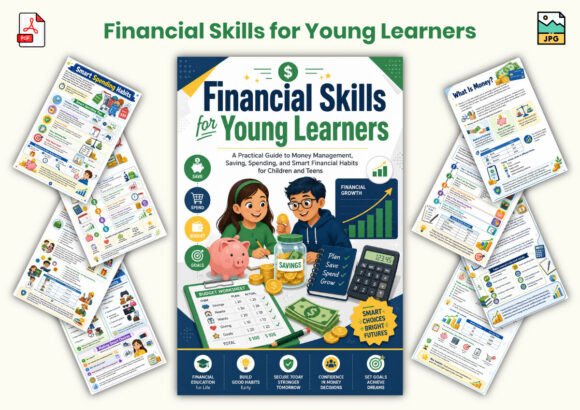
Financial literacy is one of the most valuable life skills we can pass on to the next generation, yet it often receives surprisingly little attention in traditional education. Financial Skills for Young Learners bridges that gap with a thoughtfully designed 30-page workbook that introduces children and teens to money management, saving, budgeting, and responsible decision-making. Created in a modern infographic style, this resource combines clear visual layouts with practical content that feels approachable rather than overwhelming. Whether you are an educator building a curriculum, a parent looking for tools to use at home, or a content creator developing financial literacy materials, understanding how to make the most of this workbook can open up many creative and practical possibilities.
This article explores what makes the workbook effective, how different users can adapt it for various contexts, and how to use it as a springboard for deeper learning. The goal is to help you see not just what the workbook contains, but how you can use it in ways that feel natural, engaging, and genuinely useful for young learners.
What Makes the Workbook Stand Out
The strength of Financial Skills for Young Learners lies in its structure and design. With 30 unique interior pages, each one serves a specific purpose while maintaining a cohesive visual theme. The infographic style is not just decorative — it helps break down complex ideas like opportunity cost, interest, and emergency savings into digestible visual chunks. For young learners, this approach reduces cognitive load and makes abstract financial concepts more concrete.
The workbook covers a comprehensive range of topics including understanding money, needs versus wants, goal setting, budgeting basics, saving strategies, smart spending habits, banking, interest, income and expenses, decision-making, and consumer awareness. Each topic is presented in a self-contained format that allows learners to progress at their own pace. The 6 × 9 inch size makes it portable and easy to handle, whether printed or used digitally on a tablet.
What makes this resource particularly interesting is its flexibility. It is designed for both print and digital use, and the high-quality JPG and PDF files mean you can adapt individual pages for different purposes without losing visual quality. This opens up a wide range of applications beyond simply working through the book page by page.
For Educators Building a Financial Literacy Unit
If you are a teacher or homeschool educator, Financial Skills for Young Learners can serve as the backbone of a financial literacy unit. Rather than using the workbook as a standalone activity, consider pairing each page with a hands-on exercise. For example, the budgeting basics page can be followed by a classroom simulation where students receive a fictional income and must allocate money for housing, food, and entertainment. The needs versus wants page works well alongside a sorting activity using magazines or catalogs.
You can also use individual pages as discussion starters. The opportunity cost page, for instance, lends itself to group conversations about trade-offs in everyday decisions. By integrating the workbook pages into a larger lesson plan, you help learners see that these concepts are not abstract — they apply directly to choices they make every day.
Another approach is to use the workbook as a portfolio assessment tool. Have students complete pages throughout the unit, then review their understanding by asking them to explain a concept in their own words or teach it to a peer. The clean infographic design makes it easy to spot gaps in understanding and revisit topics as needed.
For Parents Teaching Financial Skills at Home
Parents often want to teach their children about money but are unsure where to start. The workbook removes that uncertainty by providing structured content that is easy to follow. You can work through it together during a weekly family financial night, or let older children use it independently and then discuss what they learned.
One practical approach is to connect workbook lessons directly to real-life family finances. After completing the income and expenses page, for example, you can show your child a simplified version of your household budget. After the savings strategies page, help them set up their own savings goal for something they actually want to buy. This real-world connection transforms the workbook from an abstract exercise into a meaningful learning experience.
The emergency savings page is particularly valuable for older children and teens. Use it as a starting point for a conversation about financial safety nets, unexpected expenses, and why having money set aside matters. These conversations build financial resilience and help young people develop a more mature understanding of money management.
For Content Creators and Bloggers
If you create educational content or run a blog focused on parenting, teaching, or financial literacy, Financial Skills for Young Learners can be a valuable resource for developing your own materials. The infographic style can inspire your own visual content, and the topic structure provides a solid outline for a series of articles or videos.
You might create a blog post series where each article corresponds to a workbook topic, expanding on it with age-appropriate examples and activities. For instance, a post on smart spending habits could include a printable checklist that complements the workbook page. A video explaining compound interest could use the workbook's interest and financial growth page as a visual reference.
The workbook also works well as a freebie or lead magnet for building your email list. Because it covers a high-demand topic in a professional format, it offers real value to your audience. You can offer a sample of pages as a download, then direct subscribers to the full workbook for purchase. This builds trust while providing useful content.
For Small Business Owners and Freelancers
If you run a small business serving families, educators, or homeschool communities, the workbook can be incorporated into your product offerings or client resources. Financial coaches, for instance, might use select pages as handouts during family financial workshops. Tutors and learning centers can include the workbook as part of their curriculum for older students.
You can also customize the workbook for your brand. Because the files are high-quality and editable in format, you can add your logo, modify the color palette to match your brand, or rearrange pages to create a custom product. This flexibility makes it easy to offer a professional resource without starting from scratch.
For freelancers who design educational materials, the workbook serves as an excellent example of how to structure content for young learners. Study its layout, typography, and pacing to improve your own designs. The consistent yet varied page layouts demonstrate how to maintain visual coherence while keeping each spread interesting.
Adapting for Different Age Groups and Learning Styles
Financial Skills for Young Learners is designed for a broad age range, but you can easily adapt it to suit specific developmental stages. For younger children, focus on the foundational pages like understanding money, needs versus wants, and goal setting. Use concrete examples and short activities. For teens, dive deeper into budgeting, banking, interest, and emergency savings. Encourage them to apply concepts to their own part-time jobs or allowance.
For visual learners, the infographic style is already ideal. For kinesthetic learners, pair each page with a physical activity — using play money, creating a vision board for a savings goal, or visiting a bank to open a savings account. For auditory learners, read the pages aloud and discuss the concepts together. The workbook's structure supports multiple learning modes, which makes it a versatile tool for diverse classrooms and family settings.
You can also adapt the workbook for group settings versus individual use. In a classroom, students can work in pairs to compare their answers and discuss decisions. At home, siblings can use the workbook together, with older children helping younger ones. This collaborative approach reinforces learning through discussion and peer teaching.
Keeping Content Clear and Engaging
One of the biggest challenges in teaching financial literacy is making the material feel relevant rather than abstract. The workbook addresses this by using practical examples and structured layouts, but you can enhance engagement by adding your own context. When using the consumer awareness pages, for example, bring in real advertisements or product labels and ask learners to evaluate them critically. When covering goal setting, have learners write down a specific, measurable goal and track their progress over several weeks.
Consistency is also important. If you use the workbook as part of a larger program, keep the same visual style and tone across all your materials. This creates a cohesive learning experience that reduces distraction and helps learners focus on the content. The workbook's professional infographic theme provides a strong foundation that you can extend into worksheets, posters, or digital slides.
Finally, remember that financial literacy is a skill that builds over time. The workbook is not a one-time activity but a reference that learners can return to as their understanding deepens. Encourage young learners to revisit pages after they have had new experiences — after their first job, their first major purchase, or their first time managing a budget. Each return visit reinforces and expands their knowledge.
Practical Recommendations for Getting Started
If you are ready to use Financial Skills for Young Learners, here are a few practical steps to consider. First, decide whether you will use the workbook in print or digital form. Printing it gives learners a physical resource they can write on and keep. Digital use allows for easy sharing and can be more cost-effective for larger groups. Both formats work well, so choose based on your specific needs.
Next, review the table of contents and decide which pages to prioritize. You do not have to use every page in order. Focus on topics that are most relevant to your learner's current situation and build from there. For a younger child, starting with money basics and needs versus wants makes sense. For a teen about to get their first job, income, expenses, and budgeting may be more immediately useful.
Consider supplementing the workbook with additional resources like age-appropriate books, online simulations, or real-world experiences. The workbook is a strong foundation, but combining it with other tools creates a richer learning environment. A trip to a bank, a simple spreadsheet exercise, or a family discussion about saving for a vacation can all reinforce the lessons in the workbook.
Finally, make the experience positive and low-pressure. Financial literacy can feel intimidating even for adults. For young learners, the goal is not mastery but familiarity and curiosity. Celebrate small wins — a completed page, a thoughtful question, a first savings deposit. These small successes build confidence and lay the groundwork for lifelong financial skills.
Financial Skills for Young Learners is more than a workbook. It is a starting point for conversations, a framework for learning, and a tool that can be adapted to fit many different contexts. Whether you are a parent, educator, content creator, or business owner, this resource offers practical value that can be shaped to meet your goals. With its thoughtful design and comprehensive topic coverage, it helps turn abstract financial concepts into skills that young people can actually use. And in a world where financial literacy is more important than ever, that makes it a resource worth exploring.