400 Trauma Recovery Journal Prompts: A Structured Approach to Emotional Healing and Self-Discovery
Healing from trauma is rarely a linear path. It involves revisiting painful memories, understanding emotional patterns, and gradually rebuilding a sense of safety and self-worth. While professional therapy provides essential support, much of the deep inner work happens between sessions—in quiet moments of reflection, in the pages of a journal, and through consistent self-inquiry. The 400 Trauma Recovery Journal Prompts resource offers a structured framework for this kind of personal work, giving users a reliable tool to process experiences, track growth, and move forward with intention.
This article explores how this prompt collection fits into a broader healing workflow, how different users can integrate it into their routines, and what practical considerations matter when using such a resource for emotional recovery or professional practice.
What the 400 Trauma Recovery Journal Prompts Resource Offers
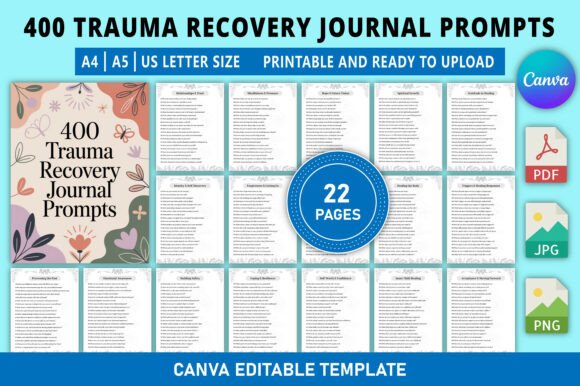
This digital workbook contains four hundred carefully crafted prompts organized into thematic sections that guide users through distinct phases of recovery. The structure covers processing the past, emotional awareness, building safety, identity self-discovery, relationships and trust, coping and resilience, forgiveness, self-worth, boundaries, inner child healing, body healing, mindfulness, hope and future vision, spiritual growth, acceptance, triggers and responses, gratitude, self-compassion, reshaping beliefs, and reclaiming joy.
Each section builds on the previous one, creating a logical progression from acknowledging pain to cultivating a renewed sense of purpose. The prompts are designed not as a rigid curriculum but as a flexible set of questions and reflections that users can adapt to their pace and readiness.
The resource comes as an editable Canva template and a print-ready PDF, making it suitable for personal use or commercial projects like therapy workbooks, coaching materials, or KDP publishing.
Where This Fits in a Broader Healing Process
Journaling is one component of a larger healing ecosystem that may include therapy, support groups, somatic practices, creative expression, and lifestyle changes. The 400 Trauma Recovery Journal Prompts serve as a structured companion to these other modalities, not a replacement for professional care. Here is how it fits into different phases of a recovery journey:
Before Therapy Sessions
Using prompts before a session helps users clarify what is currently surfacing. A prompt about triggers or emotional awareness can surface a specific memory or pattern worth discussing with a therapist. This preparation makes therapy time more productive and focused.
During Daily Reflection Practice
Many users integrate one or two prompts into a morning or evening routine. This consistency builds emotional vocabulary and normalizes self-reflection. Over weeks and months, the cumulative effect is a deeper understanding of one’s reactions and needs.
After Intense Emotional Experiences
When a trigger surface or a difficult conversation occurs, having a relevant prompt ready can help process the event in real time. The sections on triggers and coping responses are particularly useful for this kind of immediate, grounded reflection.
As Part of a Professional Practice
Therapists, coaches, and wellness practitioners can assign prompts between sessions. The thematic organization allows professionals to recommend specific sections aligned with what a client is working on. This extends the therapeutic work beyond the session and gives clients a tangible tool for self-guidance.
How It Interacts with Other Tools and Resources
The editable Canva format means this resource can be customized to match a specific brand, client group, or personal aesthetic. Here are common integrations:
- Therapy and coaching platforms: Practitioners can modify the cover, add their logo, and bundle the workbook with other resources in a client portal or course platform.
- KDP and self-publishing: The print-ready PDF can be uploaded directly to Amazon KDP, making it a commercial asset for those building a publishing business in the self-help space.
- Digital planners and habit trackers: Users can link prompt responses to habit tracking apps or digital journals, creating a comprehensive system for emotional wellness.
- Creative expression tools: Prompts can be combined with art supplies, voice memos, or video journals for a multimodal approach to processing.
Practical Implementation Tips
Integrating a large prompt collection into a real workflow requires some planning. Here are actionable strategies based on common use cases:
For Personal Use
Start with the section that feels most accessible. If processing the past feels too heavy, begin with mindfulness or self-compassion prompts. Build momentum with easier reflections before addressing more challenging material. Set a manageable cadence—three prompts per week, or one per day. Use a separate notebook or the provided workbook format to keep responses organized and revisit them after a few months to track progress.
For Therapists and Coaches
Map the prompt sections to the stages of your clinical or coaching framework. When a client is working on boundaries, assign the boundaries section for the week. During sessions, spend a few minutes discussing what came up. This creates a consistent thread between sessions and helps clients feel more engaged with their own healing process.
For Creators and Publishers
If you plan to use this as a commercial product, customize the Canva template to align with your brand colors, fonts, and messaging. Consider bundling it with a guided journal or an online course. For KDP, ensure the file meets Amazon’s trim and margin requirements. Test the print version before publishing to confirm readability and layout consistency.
For Group Settings
Support groups or workshops can use selected prompts as discussion starters. Each participant writes a short response, then shares what feels safe. This structure prevents the conversation from becoming too abstract and keeps the group grounded in personal experience.
Workflow Examples
Here are three workflow scenarios that show how different users might integrate the 400 Trauma Recovery Journal Prompts into their existing routines:
Individual Self-Healer
- Monday morning: Review the week’s schedule and identify one area of emotional focus (e.g., self-worth).
- Tuesday, Wednesday, Thursday: Spend 10–15 minutes with one prompt from the self-worth section each day.
- Friday: Reread the week’s responses. Note any patterns or shifts.
- Weekly check-in: Decide which section to explore next week based on current needs.
Therapist with a Client Caseload
- Session preparation: Review which prompt sections are relevant to each client’s current work.
- Session closure: Assign 2–3 prompts for the week, noting them in the client’s treatment plan.
- Between sessions: If a client shares a written response, use it as a starting point for the next session.
- Progress tracking: Every 6–8 weeks, have the client revisit earlier prompts to observe changes in perspective and emotional language.
Publisher Launching a Healing Journal
- Product design: Edit the Canva template to align with brand guidelines and target audience preferences.
- Content testing: Review the prompt sections for coherence and flow. Add an introductory page explaining how to use the journal.
- Format optimization: Export high-resolution PDF for KDP and a separate editable version for Canva users.
- Launch: Promote the journal by sharing sample prompts on social media, blog posts, or email lists.
Factors That Affect Usability and Long-Term Use
Several considerations influence how effectively someone can integrate this resource into their life or work:
Preparation and Familiarization
Spend time reviewing the full prompt list before diving in. Understanding the thematic structure helps users navigate the workbook with intention. For professionals, this review phase is essential for matching prompts to client needs.
Compatibility with Existing Methods
This resource works alongside most therapeutic and coaching modalities. Cognitive-behavioral, somatic, narrative, and mindfulness-based approaches all align well with journaling. If a user relies on a specific framework, they can select prompts that complement it.
Organization and Accessibility
Keep the workbook file in a location that is easy to access—cloud storage for digital use or a printed copy near a desk. Tagging or bookmarking sections can speed up navigation. For therapists, creating a quick-reference guide that maps client goals to prompt sections saves time.
Consistency vs. Flexibility
Some users benefit from a strict daily practice, while others need permission to pause. The key is to treat the prompts as a resource, not a obligation. If a section feels overwhelming, skip it and return later. The non-linear design supports this adaptive approach.
Quality Control for Commercial Use
If publishing this workbook, test the print version for visual consistency, margin alignment, and readability. For digital distribution, ensure the Canva template is fully editable and that all fonts and elements are properly embedded.
Long-Term Use and Growth Tracking
One of the most valuable aspects of a structured prompt collection is the ability to track emotional and cognitive changes over time. After completing a section, users can revisit earlier responses and notice shifts in language, emotional intensity, and perspective. This creates a tangible record of healing that reinforces motivation and self-awareness.
For professionals, periodically reviewing a client’s journal responses can reveal themes that might not surface in conversation alone. This deepens the therapeutic alliance and supports more targeted interventions.
The 400 prompts can be cycled through multiple times across months or years. As a user heals and evolves, their answers to the same questions will change, offering new insights and reinforcing growth.
Final Observations on Integration
Journal prompts are most effective when embedded in a broader system of support and self-care. The 400 Trauma Recovery Journal Prompts workbook is not a standalone cure but a companion tool that enhances therapy, coaching, personal reflection, and creative expression. Its value lies in its structure, depth, and adaptability.
For individuals, it offers a safe, private space to explore difficult material at one’s own pace. For professionals, it provides a ready-made resource that saves preparation time and increases client engagement. For creators, it represents a commercial asset that can be customized and scaled across multiple platforms.
The real work happens in the writing, the reading, and the noticing. The prompts simply open the door. What matters most is the willingness to step through—again and again, one page at a time.