2026 Self Care Workbook – Design Your Year of Wellbeing
There is a quiet shift happening in how we approach personal growth. It is no longer about grand resolutions or dramatic overhauls. Instead, the most effective self-care routines are built through small, intentional actions repeated over time. The 2026 Self Care Workbook is built for exactly that kind of steady progress. It offers a structured yet flexible space to reflect, plan, and track what matters most to you across an entire year.
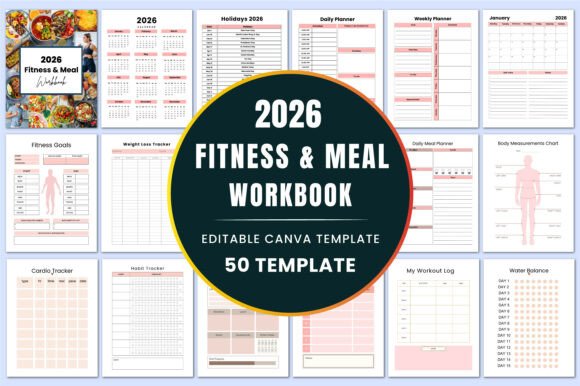
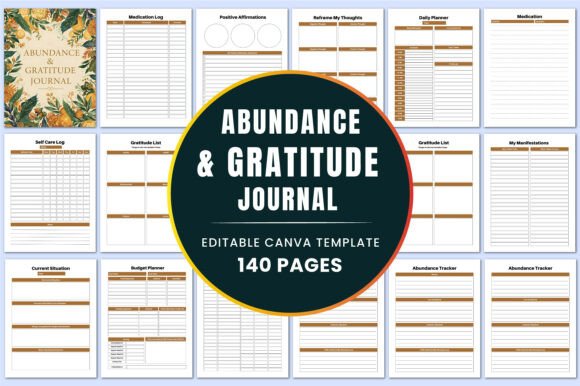
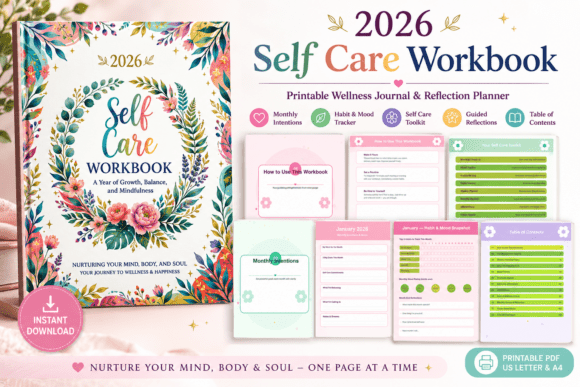
This is not a generic journal filled with blank pages. It is a carefully designed printable PDF workbook that includes daily, weekly, and monthly prompts, habit trackers, gratitude logs, goal-setting frameworks, and reflection exercises. The 2026 Self Care Workbook comes in a no-bleed format with US Letter 8.5 × 11 inch page size, making it clean and professional for home or office printing. Every page is also fully editable in Canva, so you can customize layouts, colors, and prompts to suit your personal style or brand identity.
Whether you are a designer looking for a fresh creative outlet, an entrepreneur building a morning routine, or a content creator documenting your journey for an audience, this workbook adapts to your life rather than demanding you adapt to it.
What Makes This Workbook Different from Standard Planners
Most planners focus on productivity. They measure output, deadlines, and tasks completed. The 2026 Self Care Workbook takes a different approach. It prioritizes emotional and mental wellbeing alongside your goals. Each section asks you to pause, reflect, and check in with yourself before moving forward.
Visually, the workbook avoids clutter. The layout uses generous white space, clean lines, and a calm structure that does not overwhelm the eye. The typography is legible and warm, with a mix of sans serif font styles for headings and body text that feels approachable rather than corporate. This is not a design asset meant to impress others in a portfolio. It is a private tool designed to make you feel safe and clear when you sit down to write.
The personality of the 2026 Self Care Workbook is gentle but structured. It does not pressure you to be perfect. Instead, it offers prompts like “What small kindness did you offer yourself this week?” and “What is one boundary you need to set today?” These questions guide you toward self-awareness without judgment. For many users, this becomes a personal keepsake they return to year after year.
Where the Workbook Fits Into Creative, Professional, and Personal Projects
The versatility of the 2026 Self Care Workbook makes it valuable across many contexts. If you are a small business owner or entrepreneur, you can use it as a strategic planning tool that keeps your mental health in balance while you scale your work. The monthly goal-setting pages allow you to map out professional milestones alongside personal wellness targets, so neither side of your life gets neglected.
For designers and creative professionals, the editable Canva format means you can treat the workbook as a design asset itself. Change the color palette to match your brand, adjust the font pairing to reflect your style, or add your own illustrations before printing. This makes the workbook equally useful for personal use and as a co-branded resource for coaching clients, workshop attendees, or team members.
Marketers, bloggers, and content creators can use the workbook as a lead magnet or opt-in gift for their audience. Because it is fully customizable, you can insert your own logo, brand colors, and messaging while still offering a high-value tool. The no-bleed format ensures that when your audience prints it at home, the pages come out clean with no cut-off edges. That kind of attention to detail builds trust and positions you as someone who delivers commercial font-quality design assets even in a free resource.
Publishers and crafters will appreciate how easily the workbook integrates into printed products. The handwritten font elements used for certain prompts add a human, personal feel that invites interaction. You can bind the pages into a paperback, place them in a ring binder, or simply keep loose sheets in a folder. The flexibility supports whatever workflow you prefer.
How the Workbook Influences Readability, Engagement, and Consistency
Self-care is a deeply personal practice, and the tools you use should support that intimacy rather than fight against it. The 2026 Self Care Workbook achieves this through thoughtful design choices that affect how you interact with each page.
The use of a modern typography system with clear hierarchy makes it easy to scan prompts and locate the section you need. Headings are distinct from body text, action items are clearly marked, and trackers use simple checkboxes or dot grids that do not require fine motor precision. This is especially important if you are using the workbook during low-energy days when your capacity for complexity is limited.
Because the workbook is available as a printable PDF, you are not dependent on an app or digital platform. You can write with pen on paper, which research consistently shows helps with memory retention and emotional processing. The no-bleed format also means you can print double-sided without worrying about content disappearing into the gutter. For anyone who values a physical artifact of their growth journey, this is a significant advantage.
Consistency is another area where the workbook shines. The daily and weekly prompts follow a predictable structure, which reduces decision fatigue. You do not have to wonder what to write or how to format your entry. The framework is already there, waiting for you. Over time, this repetition builds a habit loop that makes self-care feel automatic rather than effortful.
Practical Ways to Integrate the Workbook Into Your Routine
Getting started with the 2026 Self Care Workbook does not require a major time commitment. In fact, the most effective approach is to begin with five minutes a day. Here are a few realistic ways to use it based on real feedback from early users.
- Morning check-in: Open the daily prompt page with your coffee. Write one sentence about your intention for the day. That is enough to set a mindful tone without eating into your morning routine.
- Weekly review: Every Sunday, use the weekly reflection page to note three things that went well and one thing you would like to adjust. This keeps you connected to your progress without overanalyzing every moment.
- Monthly goal mapping: At the start of each month, fill out the goal-setting page. Focus on one personal goal, one professional goal, and one wellbeing goal. Keep them small and specific. The workbook gives you space to break each goal into actionable steps.
- Habit tracking: Use the habit tracker to monitor up to five habits you want to build or maintain. The design is simple enough that you can check off items in under thirty seconds, which makes it far more likely you will actually use it daily.
- Gratitude logging: The gratitude prompts are scattered throughout the workbook, not confined to one section. This prevents gratitude practice from feeling like a chore. When you encounter a prompt naturally, the response tends to be more genuine.
If you are using the editable Canva version, consider creating multiple copies with different color themes for different seasons or moods. One user reported creating a calm blue palette for winter months and a warm yellow palette for spring. This kind of personalization deepens your connection to the practice.
Choosing the Right Format and Customizing for Your Needs
The 2026 Self Care Workbook comes in two primary formats: a ready-to-print PDF and a fully editable Canva template. Both share the no-bleed letter-size layout, but they serve different use cases.
The printable PDF is ideal if you want to start using the workbook immediately. It includes all prompts, trackers, and planners exactly as designed. You can print the whole book at once or just the pages you need for the current week. Because there is no bleed, you do not have to trim margins or adjust printer settings. This is a small detail that saves time and frustration, especially if you are printing on a home inkjet printer.
The Canva editable version is better suited to users who want to personalize the workbook before printing. You can change the font pairing to match your brand identity, swap in your own script font or handwritten font choices, adjust colors, add your logo, or even rewrite prompts to better fit your specific audience if you are using it commercially. This flexibility makes the workbook a powerful creative font playground for designers and content creators.
When evaluating which version is right for you, consider your brand identity needs. If you are a coach or therapist gifting this to clients, you will want the Canva version so you can add your branding and potentially your own prompt variations. If you are using it purely for your own self-care, the printable PDF is ready to go with no extra effort required.
From a readability perspective, both versions use a clear sans serif font for body text and a warm display font for headings. This combination ensures that even small text remains legible, and the headings draw the eye without feeling aggressive. The line spacing and margins are generous, which gives the pages an open, breathable feel. That may seem like a minor aesthetic choice, but when you are journaling about difficult emotions, cramped layouts can subconsciously increase tension.
For anyone planning to use the workbook in a commercial context—whether as a freebie for email subscribers, a paid product on a marketplace, or a printed resource for clients—it is important to review the included licensing. The commercial font and design assets used in the workbook are covered by standard usage rights that allow for both personal and commercial applications. Always confirm the specific license terms before distributing, especially if you are modifying the workbook in Canva and reselling it.
One practical recommendation from experienced users is to print the workbook on a heavier paper stock, such as 100gsm or 120gsm, if you plan to write with fountain pens or markers. The no-bleed format means you do not have to worry about ink seeping through to the other side, but heavier paper gives a more premium feel and prevents ghosting. For those who prefer digital note-taking, the PDF also works well on tablets with annotation apps.
Building a Personal Keepsake That Grows With You
The true value of the 2026 Self Care Workbook reveals itself over time. A single page of daily gratitude may feel insignificant in the moment, but looking back over a month of entries reveals patterns you might otherwise miss. The habit trackers show you not just what you did, but how your consistency fluctuates with energy levels, seasons, and life events.
Many users report that after completing a few months, the workbook begins to feel like a personal archive. It holds small victories, honest struggles, and quiet moments of clarity. That is why the keepsake aspect is not just a marketing benefit—it is a functional outcome of how the workbook is structured. Each section is designed to be revisited, which encourages ongoing reflection rather than one-time completion.
If you are a content creator or blogger, sharing your journey with the workbook can also build meaningful engagement with your audience. People relate to real processes more than polished results. Showing a filled-out habit tracker or a candid weekly reflection page invites others to start their own self-care practice. The fact that the workbook is customizable means your audience can make it their own, which broadens its appeal across different personality types and workflows.
Ultimately, the 2026 Self Care Workbook is a tool that respects your time, your privacy, and your individuality. It does not promise to fix everything. Instead, it offers a reliable container for whatever you bring to it. For designers, entrepreneurs, marketers, publishers, and anyone else navigating a busy life, that kind of steady presence is rare and invaluable.